21 October 2026
Estimated reading time: 5 min
Burnout in Leaders
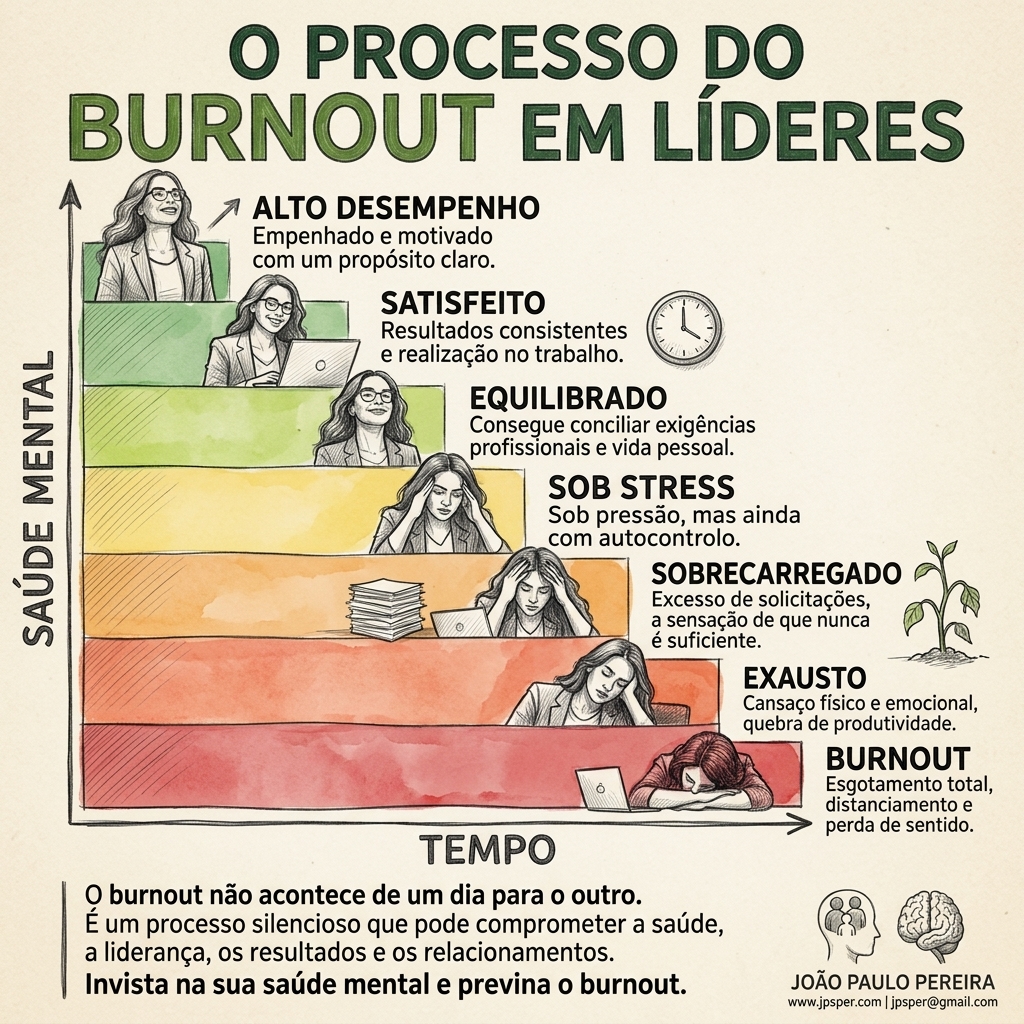
A leader may begin engaged, motivated and with a clear purpose, yet gradually lose the energy for work that once felt rewarding. The image portrays this deterioration as a descent: high performance, satisfaction, balance, stress, overload, exhaustion and burnout. Its central warning is simple: exhaustion does not necessarily happen overnight.
This sequence is an illustration, not a clinical scale or an inevitable pathway. People do not all experience these stages, or in the same order. It invites a question: what is changing in my health, in the way I lead and in the quality of the tasks I carry out?
1. When commitment becomes unsustainable
The WHO describes burnout as a syndrome resulting from chronic workplace stress that has not been successfully managed. Its dimensions are exhaustion, mental distance or cynicism towards work, and reduced professional efficacy. In the international classification it is an occupational phenomenon, not a medical condition; this does not diminish suffering or remove the need for health assessment.
A demanding week or a tiring day is not enough to identify burnout. Persistence and impact matter. Exhaustion, sleep changes and loss of interest can have other causes or coexist with anxiety or depression. The image supports reflection, but it cannot establish a diagnosis or determine which support a person needs.
2. Leaders need protection too
Leadership involves decisions, accountability for results, managing conflict and supporting people. When these demands accumulate without enough resources, autonomy or recovery, the risk of strain increases. Constant availability, difficulty delegating and the belief that “I must solve everything” can intensify pressure and narrow the space for rest.
A job title does not remove human needs. Leaders may fear that asking for help will be interpreted as incompetence and conceal difficulties while continuing to work. Silence delays care. Protecting mental health requires trusting relationships and an organisation where limits can be acknowledged without humiliation or punishment.
3. Mental health and task efficiency
Overload can undermine concentration, working memory and the ability to weigh alternatives. A straightforward decision takes longer; a message is interpreted hastily; a mistake creates rework. Someone remains busy, yet the quality and usefulness of their output may decline. More hours do not necessarily mean more meaningful results.
In leadership, the effects may reach the team: unclear priorities, impulsive responses, excessive control or less willingness to listen. These outcomes are not inevitable, but they are reasons to act early. Efficiency is not doing more at any cost: it is achieving relevant outcomes with quality, adequate resources and a sustainable pace.
4. Notice signs before reaching the limit
Pay attention to persistent changes: waking tired despite rest, irritability, difficulty switching off, reduced concentration, withdrawal from people or the feeling that nothing is enough. These are not a diagnostic checklist. They are reasons for attention, particularly when they interfere with personal or working life rather than being an occasional difficult day.
Ask yourself: am I recovering between working days? Do I have room to make decisions, or am I only responding to emergencies? Am I losing satisfaction and meaning? A confidential conversation with someone you trust can help identify changes. If signs persist, worsen or impair everyday functioning, seek assessment from a health professional.
5. Reorganise work, not just your diary
Start with priorities: identify what is essential, what can wait and what should stop. Clarify expected outcomes, responsibilities and realistic deadlines. Delegation needs autonomy, information and resources; it should not mean transferring an impossible burden to someone else. Agree when progress will be reviewed rather than constantly checking every step.
Protect concentration time and reduce meetings without a clear purpose or decision. Agree boundaries for out-of-hours contact and criteria for genuine emergencies. Plan breaks and recovery. If demand consistently exceeds capacity, renegotiate goals or resources instead of simply working faster. Scheduling alone cannot solve a structural mismatch between demands and available means.
Organisations should assess psychosocial risks with people’s participation, prevent harassment and review workloads, roles and conditions. Training and wellbeing initiatives may help, but cannot compensate for continually unachievable demands. Leaders also need support from their own management: responsibility for prevention does not disappear at the top of a team.
6. Appropriate support and recovery
Psychological support and medical assessment, when indicated, can help understand distress and identify appropriate care. Occupational health can support task adjustments and a supported return to work. Recovery does not follow the same timetable for everyone and should respect individual needs, rather than becoming another performance target to meet.
Coaching may support priorities, delegation and boundaries when appropriate; it does not replace clinical assessment or treatment. Mindfulness may complement care, without being a cure or an obligation to endure harmful conditions. Sleep, relationships and rest matter, but responsibility cannot rest only with the individual while the causes of overload remain unchanged.
Leading well also means knowing when to pause
Choose one concrete change: remove an unnecessary task, renegotiate a deadline or ask for support. Then review quality, errors and rework alongside recovery and wellbeing. Fewer available hours do not mean less value; a healthy team should not depend on a permanently exhausted leader. Progress includes making the work itself more manageable.
The image’s message deserves to become practice: invest in mental health and prevent burnout. Not only to preserve results, but because a person exists beyond their role. Looking after those who lead creates the conditions for them to care, decide and work better too. Sustainable leadership protects both people and the work they do.