22 October 2026
Estimated reading time: 5 min
I know that I don’t know, but…
The scene repeats itself every day, in offices, schools, hospitals and companies of every size. Someone asks: “Can you deliver this by Friday?” And the answer comes out almost automatically: “Yes, of course.” Inside, though, the voice is different: I know that I don’t know. I know I don’t have the time. I know I don’t master what is being asked. I know that deadline, with everything else on my plate, is unrealistic. But I say yes.
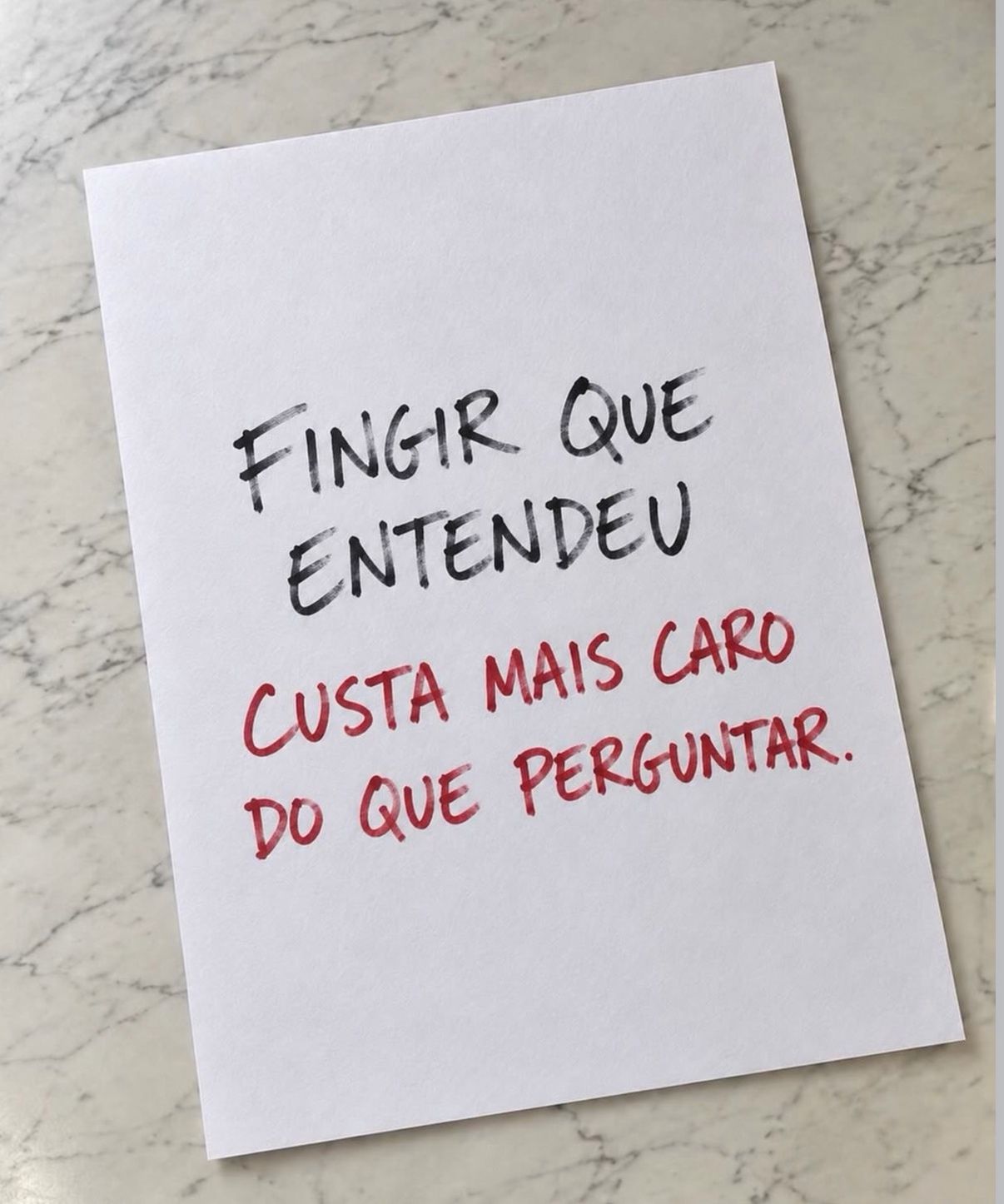
Pretending we understood costs more than asking. And silently accepting what we know will be hard to deliver is one of the most careless ways we treat ourselves — with real consequences for mental health.
1. The “yes” that comes out on its own
We accept for many reasons, almost all of them understandable: fear of disappointing, of looking incompetent, of losing our job or other people’s regard; the wish to please; ambition; or simply the habit of never having learned to say no. Some of us also accept out of discomfort — the subject is unfamiliar, the task is outside our field — yet prefer silence to admitting it.
The problem is that each of these “yeses” has a price. We accept goals with timelines and deadlines we know, from the outset, will be very hard to meet. And in silence we sign a contract of suffering with ourselves.
2. When I don’t feel up to it
There are two kinds of discomfort we rarely confess. The first is relational: we do not feel comfortable with what is being asked — the task clashes with our values, our role or what we consider fair. The second is about competence: deep down, we know we do not (yet) have the necessary skills, and admitting it feels more dangerous than the risk of failing.
Neither discomfort disappears because it is hidden. On the contrary: it works from within, turning into anticipatory anxiety, sleepless nights and procrastination — because we postpone what we do not feel ready for.
3. Blind acceptance and what it costs
Blind acceptance — without the frankness to set limits, to say no, or simply to question the terms and deadlines — is one of the factors that put mental health at risk. The mechanism is simple and cumulative.
First, it increases the sense of overload: too many tasks, too little time, and the inner certainty that the sums will not add up. Then, it reduces reward and satisfaction: we work hard and feel little, because we deliver in a rush, short of what we would like, and recognition rarely matches the effort. Overload without reward is the shortest formula for exhaustion.
4. The road to burnout
Ultimately, it is the combination of these variables that opens the way to the three dimensions of burnout: exhaustion, when energy runs out; depersonalisation, when we distance ourselves from people and from the work itself, in a defensive cynicism; and lack of accomplishment, when we stop feeling that what we do is worthwhile.
Burnout does not happen overnight — it is a process. And it often begins exactly here: in a sequence of “yeses” that should have been honest conversations. Every unrealistic acceptance is a small step in a process of increasing risk for the development of this condition.
5. Saying “I know that I don’t know”
There is an underestimated strength in frankness. Saying “I’m not sure I can do this within that deadline”, “I need support on this part”, “I can do it, but we will have to adjust the terms” is not incompetence — it is management information. It allows deadlines to be negotiated, tasks to be shared, training to be requested, priorities to be clarified. It protects both the quality of the work and the health of the person doing it.
Questioning the terms is not refusing the work: it is taking part in it. Asking is not weakness; it is what distinguishes commitment from blind obedience. Healthy organisations know this and make room for these conversations — because they prefer an honest “no” to a “yes” that ends in sick leave.
And when the context does not allow that conversation, there is still work to do on our side: knowing our own limits, recognising the signs of overload and seeking support — from colleagues, from management, from a coach or from a mental health professional. Caring for ourselves is also part of the job.
Knowing how to say no is knowing how to care
I know that I don’t know, but… — it is from this “but” that everything changes. But I can learn. But I need more time. But I can’t do it like this. But could we do it another way?
Recognising our own limits is not diminishing ourselves: it is the most basic form of self-respect. And respecting ourselves — in the deadlines we accept, the tasks we take on, the questions we ask — is where burnout prevention begins. Pretending we understood always costs more than asking.