16 October 2026
The existential vacuum: seeking meaning in life and at work
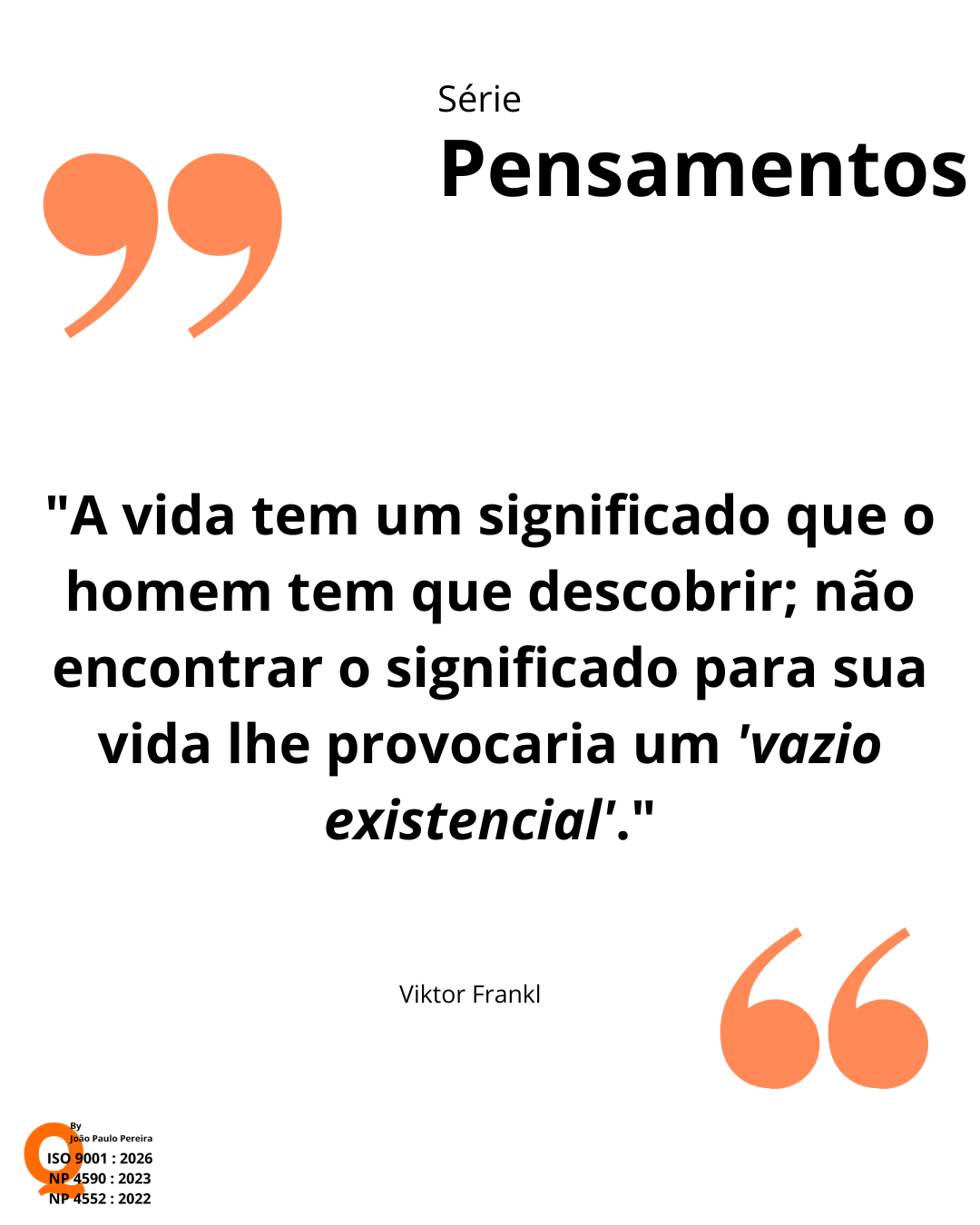
Some sentences stay with us for years. This one, by Viktor Frankl, is one of them. It reminds us that the meaning of life is not handed to us ready-made, but is something each person has to discover — and that, when this discovery does not happen, what Frankl called the "existential vacuum" sets in.
In this article I propose a reflection in two parts: first, on what this vacuum is and why it matters to face it in our lives; then, on how it shows up at work and the impact it has on people.
What the lack of meaning is
Frankl, a psychiatrist and concentration camp survivor, observed that many people did not suffer from a lack of means, but from a lack of reasons. They had something to live with, but did not know what to live for. The existential vacuum is exactly that: a persistent feeling that the days go by without direction, that what we do does not concern us, that nothing truly calls us.
It rarely appears dramatically. More often it shows up as boredom, apathy, tiredness with no apparent cause, constant restlessness trying to fill time or, on the contrary, a quiet giving up. We often try to cover it with noise: more consumption, more screens, more busyness, more performance. But the vacuum is not solved by filling the diary — it is solved by finding meaning.
It is worth stressing that feeling this vacuum is not a sign of weakness or personal failure. It is a deeply human experience, especially in times of transition, loss or change. The problem is not feeling it; it is ignoring it for too long.
Why it matters to face it
For Frankl, the search for meaning is the deepest human motivation. When that search is frustrated, the person becomes more vulnerable: to discouragement, anxiety, isolation, escape behaviours and, in some cases, more serious psychological suffering. On the other hand, those who find reasons to live tend to cope better with adversity, because suffering gains a frame and effort gains a direction.
Facing the vacuum does not mean finding one great, definitive answer. Meaning is discovered above all in the concrete. Frankl pointed to three paths: what we create and give to the world; what we receive and experience — love, beauty, our relationships with others; and the attitude we choose towards what we cannot change.
Fullness of life is not the absence of difficulties. It is the experience of being whole in what we live: recognising what we value, aligning our choices with those values and feeling that our presence makes a difference to someone. It is built daily, through small decisions, caring relationships and moments of pause to ask: "What for? For whom?"
Ways to rediscover meaning
Stop and listen: make room for discomfort instead of muffling it with constant busyness.
Clarify your values: identify what is truly important — not just urgent.
Invest in relationships: meaning is rarely found alone; it is built with and for others.
Contribute: do something, however small, that goes beyond your own interest.
Ask for help: when the vacuum lingers and weighs on you, talking to a health professional is an act of care, not of fragility.
The lack of meaning at work
We spend a huge part of our lives working. That is why work is one of the places where meaning is most at stake — and where the vacuum is most felt. When people do not understand what their work is for, do not see the result of their effort, do not recognise themselves in the organisation's values or feel like a replaceable part, work stops being a source of fulfilment and becomes mere obligation.
This vacuum has many faces. It can be the boreout of those with tasks that offer no challenge or perceived usefulness; the rustout of those who, over the years, have been left without stimulus or prospects; or the exhaustion of those who work intensely without knowing why. It can also stem from inconsistencies: talk about people and values that is not reflected in everyday practice.
The impact on the person
The lack of meaning at work does not stay at the company door. It follows people home and affects their health, their relationships and how they see themselves. It shows up as demotivation, cynicism, irritability, persistent fatigue, sleep problems, loss of confidence and, often, a gradual withdrawal — first emotional, then physical.
For organisations, the consequences are equally visible: more absenteeism and presenteeism, higher turnover, lower engagement, less creativity and more fragile teams. But the deepest cost is human: capable people who stop believing in the value of what they do.
What organisations and leaders can do
Meaning cannot be imposed by decree, but it can be encouraged. Organisations have a clear responsibility here: to create the conditions for each person to understand the purpose of their work and the impact it has on others.
This means close leadership that explains the why behind decisions and recognises each person's contribution; roles designed with autonomy, challenge and room to grow; consistency between stated values and real practice; relationships of trust and psychological safety; and active management of psychosocial risks that looks at how work is organised and not only at the individual.
Standards such as NP 4590, NP 4552 and ISO 9001 help give structure to this path by placing people, work–life balance and continuous improvement at the heart of management. But no system replaces the essential: the way each person is treated, heard and valued every day.
A shared discovery
Frankl reminds us that meaning has to be discovered. This discovery is personal, but not solitary. Each of us can ask what gives meaning to our life and our work; and each organisation can ask whether it is helping or hindering that discovery.
Facing the existential vacuum is, ultimately, choosing to live — and work — with more awareness, more consistency and more humanity. That is where a fuller life and truly healthy organisations begin.