16 October 2026
Viktor Frankl: the freedom to choose and meaning at work
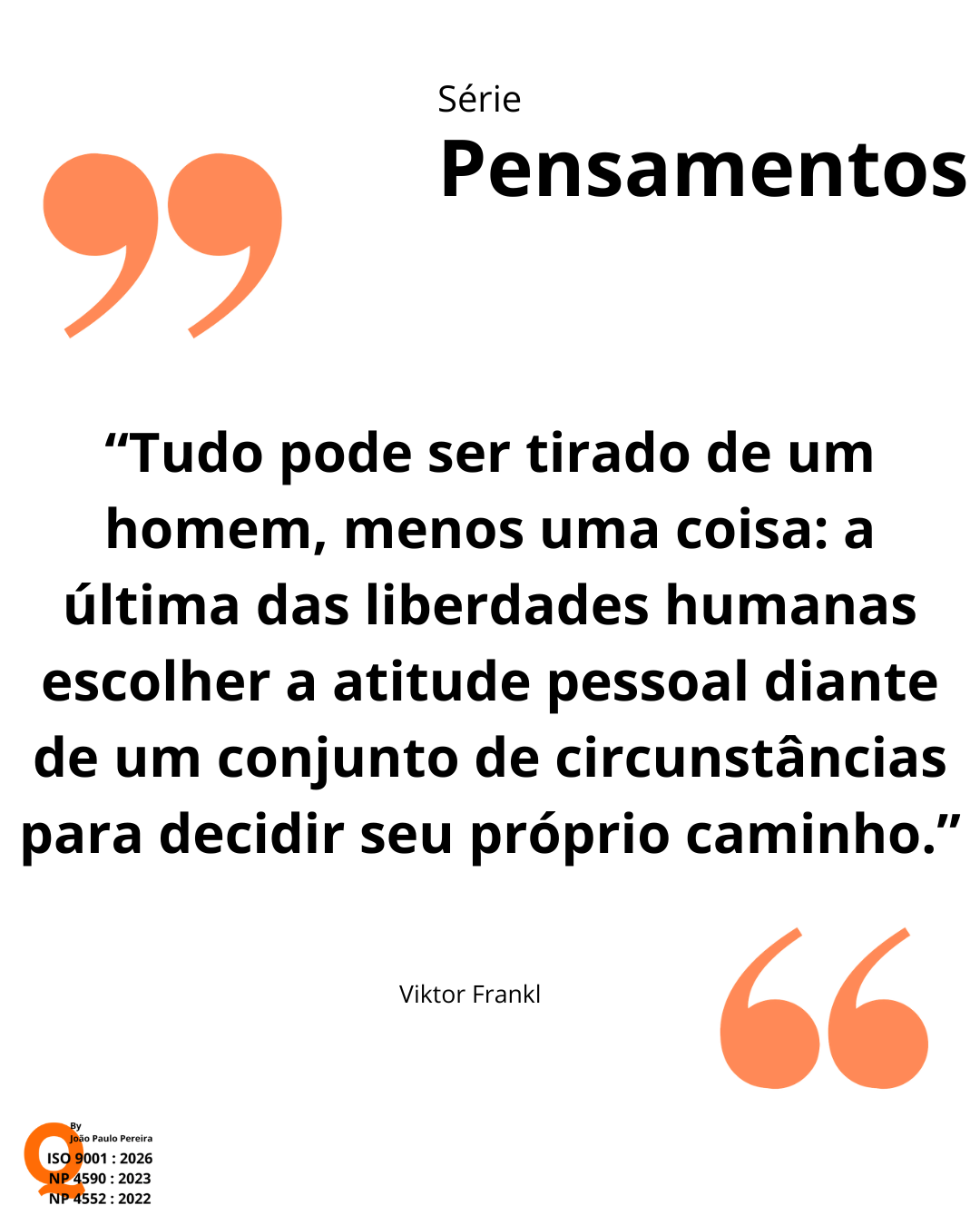
Viktor Frankl's famous maxim — "Everything can be taken from a man but one thing: the last of the human freedoms — to choose one's attitude in any given set of circumstances, to choose one's own way" — sums up the cornerstone of logotherapy: individual responsibility for one's own destiny.
For Frankl, creating meaning in life is not a privilege reserved for times of prosperity, nor something granted by the outside world, but a conscious act of choice. Even when a person is deprived of possessions, rights or comfort, their inner sovereignty to decide how to respond to adversity remains intact. It is precisely in that space between stimulus and response that human dignity lies, turning pain or limitation into a testimony of spiritual maturity and purpose.
Meaning at work
Extending this premise to the professional sphere, the meaning of work turns out not to be an inherent property of a given profession, but a reflection of the attitude with which the work is done. The corporate and working environment is often marked by constraints beyond the individual's control: restructuring, pressure to hit targets, power dynamics or routine tasks. Yet adopting Frankl's perspective means recognising that, although we cannot control every variable in our working environment, we keep the freedom to choose the purpose we give to our daily tasks.
Meaning at work therefore arises from the shift from a passive stance — where professionals see themselves as mere victims of circumstance — to an active, engaged one. Work stops being a mechanical obligation and becomes a vehicle for personal fulfilment, service to others and ethical consistency. By taking responsibility for their attitude, workers reframe the normal challenges of a career as opportunities to learn and grow, turning everyday working life into an authentic path of maturity and development.
Inner freedom does not mean responsibility for suffering
This reading, however, requires an essential distinction: recognising the ability to choose a response does not mean claiming that everything depends on willpower, or that those who suffer failed to find the right attitude. Inner freedom is exercised within real limits — physical, psychological, social and material. Illness, exhaustion and precariousness can narrow the room for action and make support from other people and health professionals necessary.
Finding meaning also does not mean accepting the unacceptable. In the face of harassment, discrimination or persistent overload, a responsible response may be to set boundaries, report a situation, seek protection or change context. Frankl's thinking should not be used to romanticise avoidable suffering, nor to shift onto workers the duty of enduring an organisation that makes them ill.
Meaning and mental health promotion
Promoting mental health is more than preventing illness: it is creating the conditions to live, relate and take part with dignity. Feeling that our contribution has value, that we belong to a community and that our values and actions are consistent can support wellbeing. The World Health Organization lists purpose, positive relationships and inclusion among the benefits that decent work can provide.
Meaning works here as a compass, not as a guarantee of immunity. Having a purpose does not, by itself, prevent anxiety, depression or other mental health difficulties. But it can help recognise priorities, seek support and decide where to invest energy. The question is no longer only "How can I endure more?" but also "What do I need to protect in order to keep living and working in a healthy way?".
This shift makes it possible to tell commitment apart from unlimited availability. A person can deeply value their work and, at the same time, need rest, psychological support or a reorganisation of their responsibilities. Asking for help does not contradict autonomy: it is one of the ways of exercising it.
Quality of life: the person beyond the role
Quality of life is not limited to income, position or productivity. It includes how each person experiences their health, relationships, material security, available time and the possibility of achieving what they consider important. An externally recognised career can coexist with a life impoverished by tiredness, lack of time or distance from meaningful relationships.
Linking meaning and quality of life therefore means recognising that identity is bigger than the professional role. Family, friendship, community involvement, leisure and rest are also places of fulfilment. Work can enrich life, but it should not take up all the space from which that life draws meaning.
Enough sleep, physical activity suited to each person, a balanced diet and supportive relationships are part of looking after health. They should not, however, be presented as individual solutions to structural problems. If schedules prevent rest or workload makes recovery impossible, the conditions in which work happens also need to change.
Quality of work life: transforming the conditions
Quality of work life is reflected in the daily experience of those who work: workload, autonomy, clarity of responsibilities, fairness in decisions, safety and the quality of relationships. It is not just occasional perks or wellbeing initiatives disconnected from how work is organised. A pleasant space does not, on its own, make up for humiliating leadership or consistently unachievable targets.
The WHO guidelines on mental health at work include organisational interventions among the necessary responses. In practice, this means assessing psychosocial risks with workers' participation, matching demands to available resources, clarifying priorities, preventing harassment and creating safe channels for listening. It also means preparing leaders to respond with respect, without giving them the role of diagnosing or treating.
Meaning gains substance when words and practice are consistent. Saying that "people come first" requires decisions that protect breaks, respect boundaries and allow personal and working life to be balanced. Trust grows when it is possible to talk about difficulties without fear of humiliation or penalty.
Disease prevention: act early, recognise early, support afterwards
Prevention requires action at different moments. Before problems arise, exposure to risk factors must be reduced: continued overload, violence, insecurity, isolation or lack of control over work. Teaching people to manage stress is not enough if its causes remain untouched. Prevention also starts with how tasks, schedules and relationships are designed.
When difficulties appear, recognising persistent changes in sleep, irritability, intense tiredness, isolation or concentration problems early can encourage people to seek support. These signs are not, in themselves, a diagnosis and may have different causes. If they persist, worsen or interfere with daily life, they warrant an assessment by a health professional. Information and the fight against stigma should make that access easier, not turn colleagues or managers into clinical assessors.
When illness is present, care includes appropriate treatment, confidentiality and working conditions adjusted to the person's needs. A supported return to work, with adjustments where necessary, can aid recovery and participation. Reflecting on meaning can be part of that journey, but it must never replace clinical care or be presented as a cure.
Physical and mental health should be considered together, without reducing all illness to stress or personal attitude. Prevention includes the health monitoring recommended for each person and protection against relevant occupational risks. None of these measures guarantees the absence of illness; the aim is to reduce risks, encourage timely care and avoid preventable deterioration.
A shared responsibility
Frankl's contribution becomes particularly fruitful when individual responsibility meets collective responsibility. It is up to the person, within their means, to recognise needs, seek support and make choices consistent with their values. It is up to the organisation to create decent conditions, prevent risks and ensure that care does not depend solely on each worker's capacity to endure.
Perhaps the most important question is not only "What attitude do I choose in these circumstances?" but also "What circumstances are we creating so that people can live and work better?". It is in this meeting of meaning, care and concrete conditions that quality of life stops being an intention and starts guiding disease prevention and mental health promotion.