17 November 2026
And one day Ricardo said to me…
Estimated reading time: 4 min
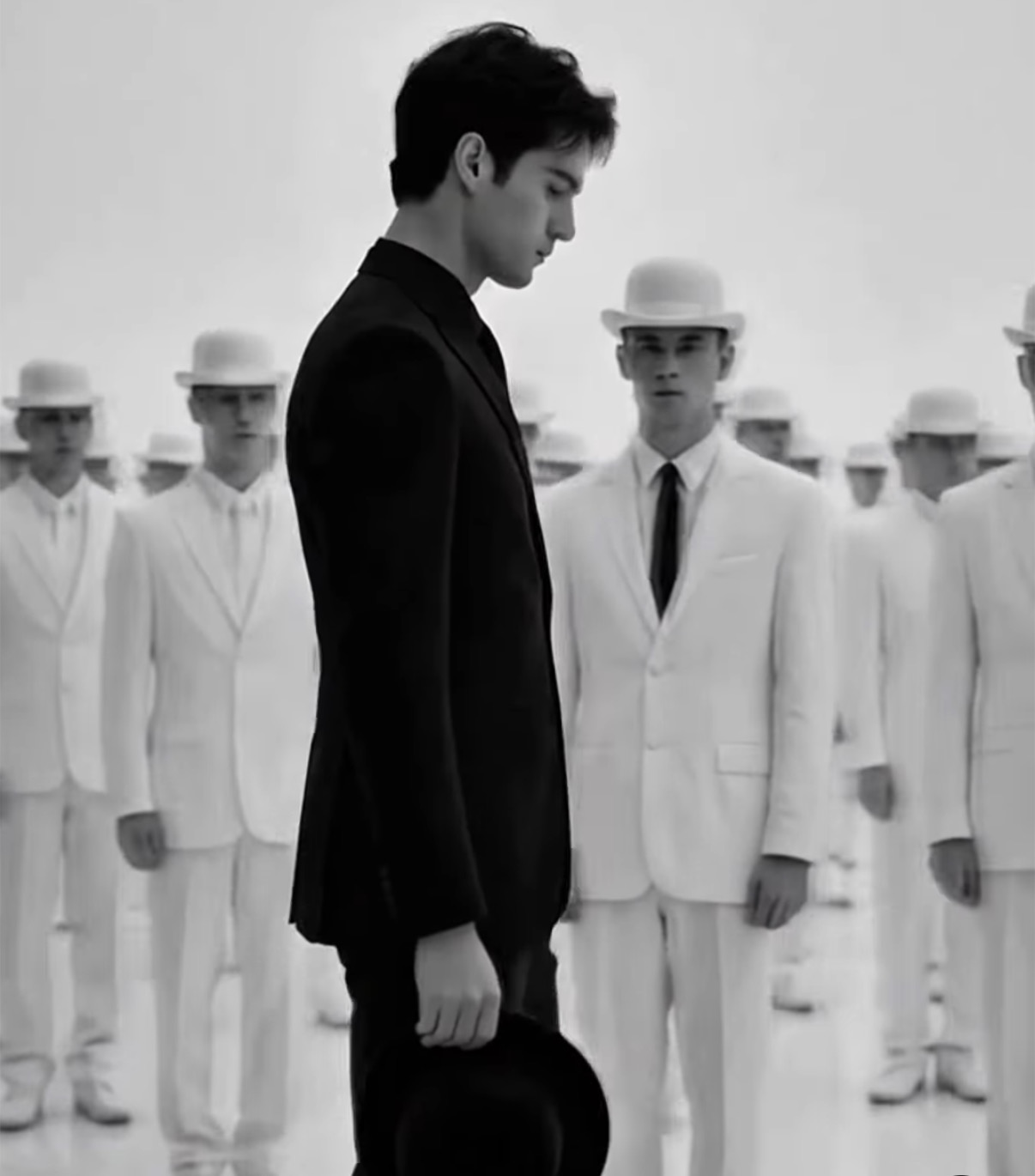
Some conversations stay with us long after they end. The one I had with Ricardo is one of them. It began in an ordinary way, at the end of a working day like so many others, and became one of those stories I tell whenever people ask me why I talk so much about purpose. This is Ricardo’s story — and, perhaps, the story of many of us.
Ricardo
Ricardo was one of those people organisations love to show off. Competent, rigorous, reliable. Consistently rated as a high performer, he was recognised by everyone: by his peers, who turned to him when a problem was hard; by management, who entrusted him with the important projects; by clients, who asked for him by name. If there were a poster of the company’s exemplary professional, his face would probably be on it.
From the outside, the equation seemed solved: recognised talent, consistent results, a career on the rise. Ricardo had everything we usually call success. And yet it was precisely this man who, one day, came up to me with a decision nobody expected.
“I’m going to stop”
He said it without drama, with the calm of someone who had thought about it for a long time: he was going to stop. He was thinking of taking a break to redirect himself. My first reaction was everyone’s — to look for the problem in the usual place. Was he exhausted? Was there a conflict with someone? Had the workload become excessive? Had the company failed him?
None of that. The problem was not the work, he told me. It was something more relevant to him, something he struggled to name but felt with growing clarity: something was missing. The days were fulfilled, the targets were met, the praise kept coming — and yet what he was doing had stopped speaking to him. The sense of life his work gave him had slowly drained away, without anyone noticing. Not even himself, for a long time.
When meaning drains away
Ricardo’s story is more common than we think — and it rarely happens to those who are struggling. It often happens to those at the top of their performance. Because high performance has a silent trap: the pace leaves no room for questions. While we are running, nobody stops to ask where to. External recognition works like a mild anaesthetic — it postpones the discomfort without resolving it.
Until one day the question imposes itself: what for? What is all this for? And when that question finds no answer, neither results, nor prizes, nor praise are enough to silence it. It is not ingratitude, it is not weakness, it is not a midlife crisis. It is one of the most human experiences there is: the need for what we devote our lives to to have meaning for us.
The urgency of rediscovering the why
What Ricardo realised — and had the courage to admit — is that what he needed was not more holidays, nor another project, nor a promotion. He needed to rediscover his why: the deep reason that gives direction to effort and turns tasks into contribution. Without that why, work becomes just a succession of competent days. With it, the same work can once again become a place of fulfilment.
Rediscovering the why is not a weekend exercise. It is a process that asks for pause, honesty and, often, company: asking what we value, what we want to leave of ourselves in others, where our energy is renewed instead of drained. And it asks organisations to make room for those questions — because when a Ricardo stops, the company does not just lose a high performer; it loses someone who, with meaning, would keep making a difference.
What Ricardo’s story teaches us
I cannot tell you how this story ends, because Ricardo is still writing it. I know his decision was not giving up — it was a lucid new beginning. And I know the conversation we had changed me too: it reminded me that the most important question we can ask someone who works with us is not “can you do it?”, but “does it make sense to you?”.
If any part of this story sounds familiar, perhaps it is time to pause for a moment — not necessarily from work, but from the pace — and return the question to the place it should never have left: what is your why? Rediscovering it is not a luxury. It is, increasingly, an urgency.